Nature & Parks in the Dominican Republic
Explore lush national parks, pristine nature reserves, botanical gardens, and wildlife sanctuaries across the Dominican Republic. From tropical rainforests and mangrove swamps to mountain trails and cascading waterfalls.
Key Takeaways
- The DR has 30+ national parks and protected areas covering 25% of its territory, more than any other Caribbean island
- Top parks include Los Haitises (mangrove kayaking), Jaragua (flamingos), and El Choco (cenote caves)
- Most park entry fees are $3-10 per person — guided tours range from $30-80 and include transportation from major hotels
- Best months for nature visits are November through April when humidity is lower and trails are drier
All Nature & Parks (0)
Nature & Parks in the Dominican Republic — Complete 2026 Guide
The Dominican Republic protects more land in national parks and reserves than any other Caribbean nation — roughly a quarter of the country sits inside designated conservation areas. That commitment translates into an extraordinary range of nature experiences in a single trip: a morning kayaking inside Los Haitises mangrove cathedrals, an afternoon swimming below Salto El Limón, and a night listening to coquí frogs from a mountain lodge in Jarabacoa. Few destinations in the Americas pack so much biodiversity into so few road hours.
Los Haitises National Park, on the southern shore of Samaná Bay, is the country's most photographed nature destination. Boat tours weave between dome-shaped karst islets, glide into bat-filled sea caves with intact pre-Columbian Taíno pictographs, and dock at hidden mangrove channels where kayakers paddle under tunnels of red mangrove roots. Half-day boat tours from Sabana de la Mar run $40–70; multi-day eco-lodge stays at Paraíso Caño Hondo include guided trail hikes, swimming pools fed by mountain rivers, and sunrise birding from observation decks.
In the Cordillera Central, Pico Duarte rises 3,098 meters (10,164 ft) — the highest peak in the entire Caribbean. The standard 3-day, 46-km round-trip trek begins at La Ciénaga and follows mule-supported pine-forest trails to the summit, where the sunrise above the cloud layer is one of the most spectacular views in the Americas. Mandatory licensed guides cost $150–200 per person for the full trek including pack mules, food, and tent camps. Closer to Jarabacoa, Salto de Jimenoa, Salto Baiguate, and the rapids of the Yaque del Norte make ideal half-day adventures even for visitors not climbing to the summit.
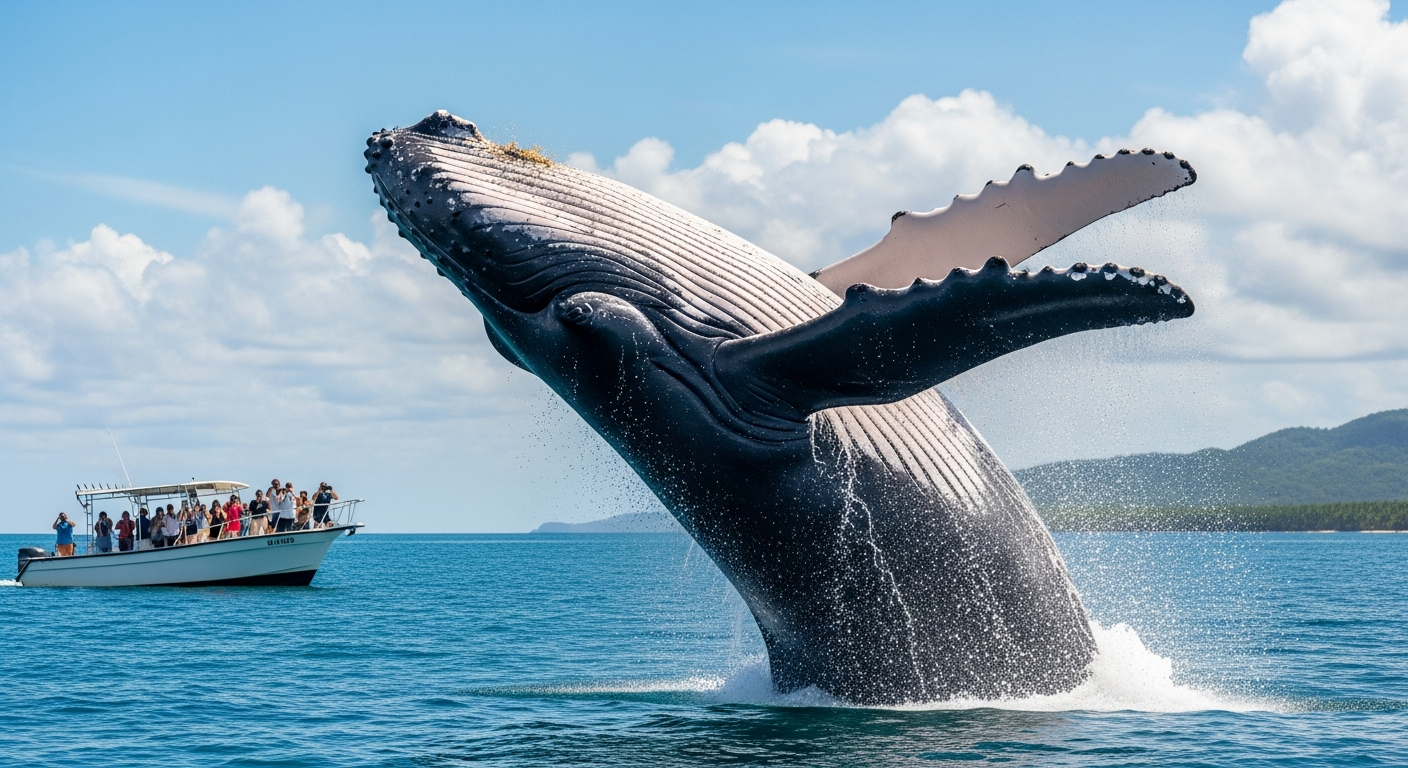
On the Samaná Peninsula, Salto El Limón cascades 40 meters into a deep emerald pool you can swim in. The 90-minute approach is most often done on horseback ($25–35 per person including guide and lunch at a local rancho) but can be walked by fit hikers. From January through March, Samaná Bay hosts the largest North Atlantic concentration of humpback whales — approximately 2,000 animals migrate here to mate and calve. Whale-watching boats depart Samaná town daily and cost $65–85 per person; the Centro de Observación de Mamíferos Marinos enforces strict approach-distance rules that protect both whales and visitors.
Bird-watchers and botanists should head southwest to Jaragua and Sierra de Bahoruco National Parks, where dozens of single-island endemics — the Hispaniolan trogon, Bay-breasted cuckoo, Ridgway's hawk, and the world's smallest reptile (Sphaerodactylus ariasae) — live nowhere else on Earth. Lago Enriquillo, the Caribbean's largest hypersaline lake, hosts American crocodiles, rhinoceros iguanas, and pink flamingos that feed in the surrounding salt flats. Permits for the most sensitive areas are arranged through licensed local guides; expect to pay $60–120 per person for a guided full-day excursion.
Nature parks reward visitors who plan around the dry season. From December through April, trails are firm, river crossings are safe, and visibility from mountain summits is exceptional. The hurricane months (August–October) bring afternoon thunderstorms and occasional park closures; July and November are sweet-spot months with green landscapes and lower visitor numbers. Wherever you go, bring DEET-based repellent, polarized sunglasses, water shoes for cenotes and rivers, and small bills in Dominican pesos for park entry fees that range from RD$100 to RD$500 per person.
What Are the Best Nature Experiences in the Dominican Republic?
The Dominican Republic is home to some of the Caribbean's most biodiverse ecosystems. Los Haitises National Park offers kayaking through mangrove-lined channels and exploring ancient Taino caves. In the Cordillera Central, Pico Duarte stands as the highest peak in the Caribbean at 3,087 meters. Samana's El Limon waterfall is a must-visit, reachable by horseback or hiking trail. For bird watchers, Jaragua National Park and Sierra de Bahoruco host endemic species found nowhere else on Earth.
Do I need a guide to visit Los Haitises National Park?
Yes — Los Haitises is only accessible by boat, and all visitors must enter with an authorized operator. Half-day boat tours from Sabana de la Mar or Sánchez run $40–70 per person and include cave visits, mangrove paddling, and lunch.
When can you see whales in Samaná?
Humpback whales are present in Samaná Bay from approximately January 15 through March 25 each year. Tours depart daily from Samaná town between 9 AM and 1 PM and last 3–4 hours. Sightings during the peak weeks of February are virtually guaranteed.
How fit do I need to be to climb Pico Duarte?
Pico Duarte requires no technical climbing skills, but the 46-km round trip with 2,000 m of elevation gain demands strong legs and good cardio fitness. Most visitors complete the trek in 3 days. Pack mules carry all gear so you only carry a daypack.
Are nature parks family-friendly?
Yes — Indigenous Eyes Ecological Park in Punta Cana, the 27 Charcos canyoning at Damajagua, and the El Choco caves at Cabarete all welcome children. Many lodges offer shorter family-paced versions of their adult tours.
More to Explore
Browse Other Activity Categories
Discover more ways to experience the Dominican Republic across all our activity categories.
AI-Powered Methodology
IslaAI continuously scans, aggregates, and cross-references data from official tourism databases, mapping services, traveler reviews, and government sources. Every listing is AI-verified for accuracy including pricing, hours, location coordinates, and availability. Our AI engine refreshes data daily to deliver the most up-to-date Dominican Republic travel intelligence available anywhere online.
Data Sources
- Dominican Republic Ministry of Tourism (MITUR)
- OpenStreetMap geographic and business data
- AI-powered real-time scanning and cross-referencing
- Published traveler reviews and community feedback
Explore More
More Activities
Book Tours & Experiences
Explore Destinations
Free Membership
The resort you almost booked? It dropped 40% last Tuesday.
Our members caught it. Get weekly DR travel intelligence — rate drops, new route alerts, and curated itineraries — delivered free every Thursday.